Why ai voice agents will be the most important sales hire in 2026


You hire salespeople for their sales skills. Their ability to build trust. To listen and ask the right questions.
And then you make them update the CRM.
The problem: one role, two completely different jobs.
Sales is actually two jobs in one
Job 1: Having conversations that matter. Listening to someone's situation. Sensing doubt. Recognizing patterns. Guiding someone to a good decision. This requires human skills: empathy, judgment, timing.
Job 2: Keeping the operational machine running. Calling back leads within 5 minutes. Qualifying against your checklist. Updating the CRM. Sending follow-up #3. Scheduling meetings. Updating the CRM that the meeting is scheduled. This doesn't require human skills, it requires speed and discipline.
We expect one person to do both jobs all day long, switching back and forth.
And that doesn't work.
There's no wonder tool. There's a stack.
For the first time, we have technology that can solve each piece of this problem. Not one AI tool that does everything. Different specialized solutions that make the difference together.
1. Targeting: who should you even reach out to?
Clay lets AI agents select the right prospects based on signals. Has this company recently grown? Are they entering a new market? Just received funding?
For Belgium: Bizzy does the same with local data: financial health, growth indicators, decision makers from Belgian sources that Clay doesn't have.
2. Timing and outreach: when and how do you reach someone?
Lemlist and Instantly build outreach and cadences based on intent. Website visits, email opens, engagement. The next step triggers not because 3 days have passed, but because someone showed interest.
3. CRM hell: nobody wants to fill this in
Donna sits between the salesperson and the CRM. Listens in, takes notes, updates automatically. Especially useful for field sales for whom CRM updates simply never happen if it's manual.
4. Contact: nobody picks up, and nobody calls back
At Ringtime we focus on this.
Inbound: someone calls, gets voicemail, doesn't get called back, calls your competitor.
Outbound: your Facebook campaign runs over the weekend. Monday morning 47 leads. By the time your sales team has called them all, they're cold. The best conversion? After 5 PM, exactly when your team wants to go home.
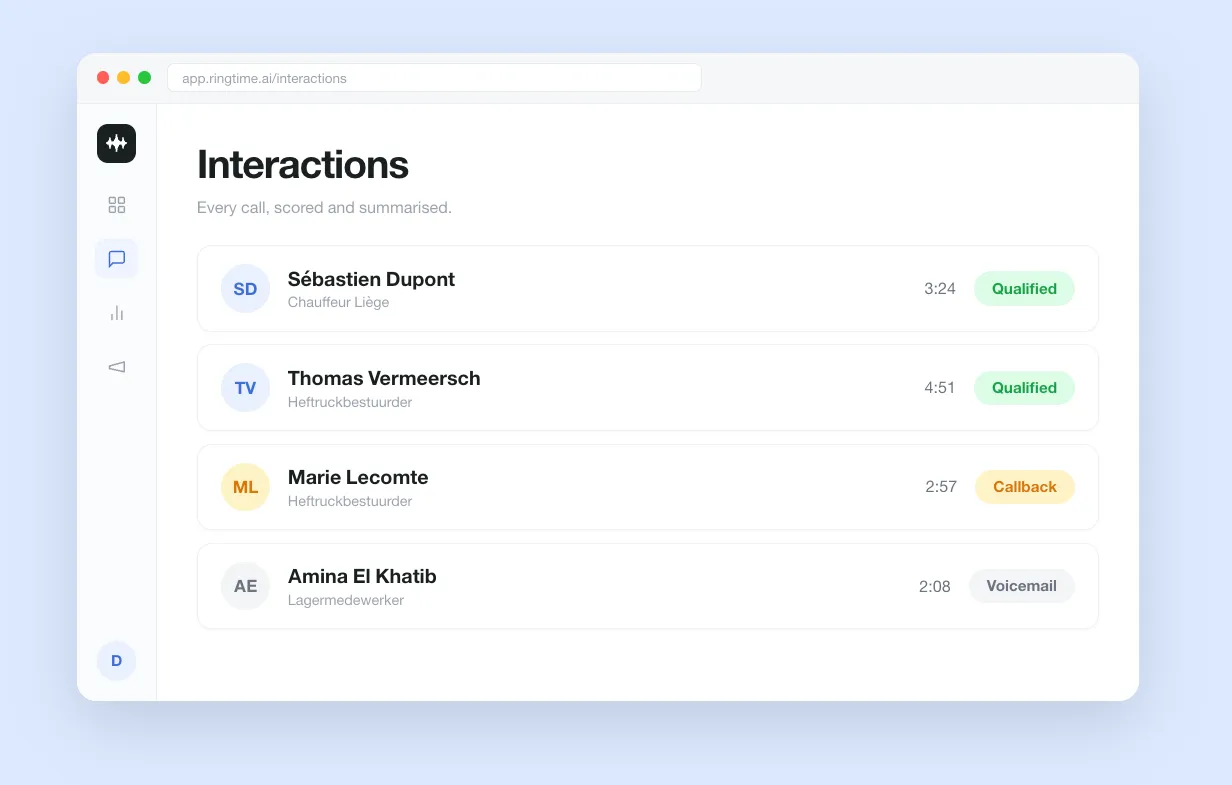
AI voice assistants pick up the phone. Immediately. Call back leads outside business hours. Run cadences at moments when conversion is highest.
The difference with Donna? We sit between the prospect/customer and your systems. Donna sits between your employee and the CRM.
I often hear doubt
Is this just hype?
The problems are real. Leads dying, CRMs filled in half-heartedly, salespeople burning out. That existed before AI.
The question is whether the tools work. And they already work. Measurably.
The real risk? Doubting too long while the gap grows.
But you can't just "turn on" these tools on top of your current chaos. You need to redesign your internal processes. Think about which work AI does and which work people do. Redefine roles. Have conversations with your team.
The gap
Type 1 companies aren't stupid. They see it too. They know their SDRs are burning out. They know leads are dying.
But they're paralyzed. By doubt. By fear that customers won't want to talk to AI. By fear that it'll be too expensive. By fear that they'll lose their team if they implement this.
So they keep running small pilots. Trying a tool. But never redesigning the full workflow. Because that feels too risky, too definitive.
Type 2 companies build a stack of AI tools. They've rewritten processes. They've invested in training their team. They've had the uncomfortable conversations.
And meanwhile the gap grows. Type 2 accepted earlier that discomfort now is smaller than the pain of continuing to wait.
What 2026 will look like
2026 won't be the year companies replace their sales teams with machines. It'll be the year we stop pretending one person can do two completely different jobs simultaneously.
AI tools each handle a specific piece: targeting, timing, contact, administration. People handle the strategic, emotional, value-creating part.
The most important sales "hire" you'll make in 2026? It won't be human. Not because people matter less. But because they can finally focus on the work only they can do.
BLOG