
Screen hundreds of candidates before your team starts the day





Manual screening breaks down the moment volume goes up
70%
3-5 days
22+
80%
Three steps. Fully automated.
Screening is triggered
AI screens via phone + WhatsApp
Qualified shortlist in your ATS
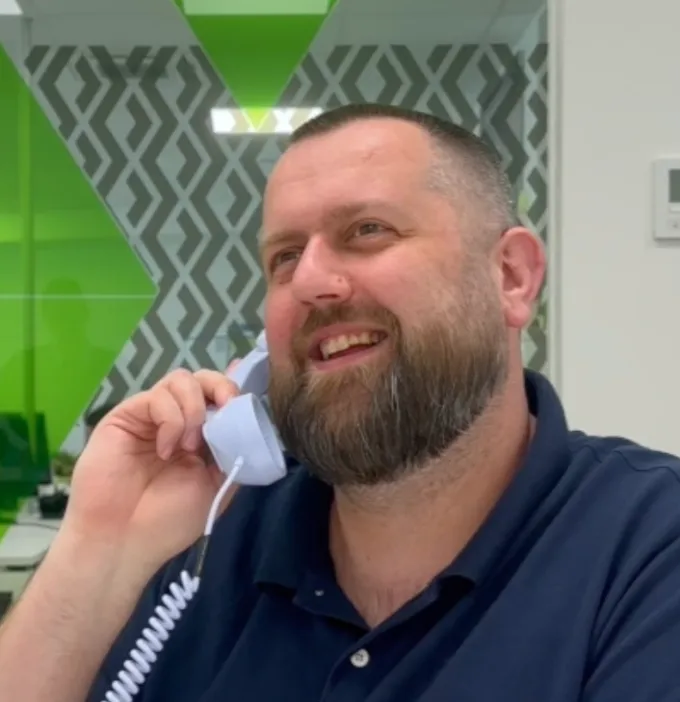
See how Ringtime screens candidates for you
Candidate matched in ATS
Ringtime screens via call or WhatsApp
Results back in your ATS


Book your demo

Why this works for blue-collar candidates

Evenings, weekends, between shifts

22+ languages, no language menus

Phone and WhatsApp, not forms


Works in front of your ATS, not instead of it
- Deployed in weeks, not months
- No vendor lock-in
- No platform migration

GDPR-native.
EU-hosted. AI Act-proof.
What is AI candidate screening?
AI candidate screening is the process of using an AI agent to conduct structured screening interviews with job applicants, by phone, WhatsApp, or both, without a recruiter on the line. The AI contacts candidates, asks screening questions about availability, qualifications, and deal-breakers, understands their natural language answers, and writes structured results back to the recruiter's ATS.
It's different from form-based screening, where candidates fill in online questionnaires that most frontline applicants abandon. And it's different from chatbot screening, which relies on text-based conversations on a website. AI candidate screening uses voice and messaging channels that candidates actually use, with natural language understanding that allows for a real two-way conversation.
For staffing agencies doing high-volume frontline hiring, the first screening step is the most repetitive part of the process. The same 8 to 10 questions, hundreds of times a week. AI candidate screening handles that layer entirely. Recruiters only spend time on candidates who've already been screened, qualified, and scored.
How is AI used in candidate screening?
In a manual screening process, a recruiter dials the candidate, runs through a set of questions (availability, start date, shift preferences, certifications, transport), takes notes, and updates the ATS. Each call takes 5 to 8 minutes when the candidate picks up. The problem: most calls go to voicemail, emails go unread, and forms get abandoned. A recruiter works through 50 contacts to have 10 real conversations.
AI changes this by handling the entire first-contact loop. The AI reaches out via phone and WhatsApp, asks the screening questions in the candidate's language, handles follow-ups and clarifications, and writes structured data back to the ATS. A typical AI screening interview lasts 3 to 5 minutes. The AI introduces itself, explains the role, and runs through structured questions: when can you start, what shifts can you work, do you have transport to the site, do you hold the required certifications, and what are your salary expectations. The candidate responds naturally: no button pressing, no rigid scripts.
After the conversation, every answer is written to the ATS as structured data. The recruiter sees a completed candidate profile with availability, qualifications, and deal-breaker flags. No call notes to decipher, no manual data entry, and no screening that depends on whether the recruiter remembered to ask about transport.
Can AI replace human recruiters in screening?
AI handles the repetitive first layer of screening, not the full recruiter role. The initial screening step is the same 8 to 10 questions, hundreds of times a week. AI candidate screening takes that layer off the recruiter's plate entirely, so their first conversation is with someone who's already been screened for availability, qualifications, and deal-breakers.
What AI can't replace is the nuanced work that comes after: matching the right candidate to the right role, selling the opportunity, reading between the lines, and building relationships. The recruiter's expertise is better spent there. AI screening makes that possible by ensuring recruiters start with qualified candidates instead of spending hours dialing numbers that ring out.
Who uses AI candidate screening?
AI candidate screening is most effective for staffing agencies, recruitment process outsourcing (RPO) firms, and large in-house talent acquisition teams that handle high volumes of frontline and blue-collar hiring. The common thread: hundreds or thousands of candidates per month who all need the same initial screening before a recruiter gets involved.
Typical use cases include warehouse and logistics roles where shift availability and transport are the primary screening criteria, construction and industrial roles requiring specific certifications (VCA, forklift), healthcare staffing where language proficiency and scheduling flexibility matter, and hospitality roles with high turnover and constant hiring pressure. In Belgium and the Netherlands, where candidate pools span dozens of languages and GDPR compliance is non-negotiable, AI candidate screening solves both the volume problem and the multilingual challenge simultaneously.
AI candidate screening works best when the screening criteria are structured and repeatable. If your recruiters ask the same 8 questions on every first call, that's the layer the AI handles. The recruiter's expertise is better spent on the nuanced conversations that come after: matching the right candidate to the right role, selling the opportunity, and building relationships with candidates who are already qualified.
Is AI screening GDPR compliant?
For staffing agencies operating in the EU, GDPR compliance is non-negotiable. Ringtime is GDPR-native and EU-hosted, with all candidate data and voice recordings stored on servers in Frankfurt and Amsterdam. Consent is handled at the start of every call or WhatsApp conversation. Retention policies are fully configurable per client, and candidates can exercise their right to data deletion at any time. There is no transatlantic data transfer and no reliance on third-party processors outside the EU for candidate data.