
See which job applications get an answer

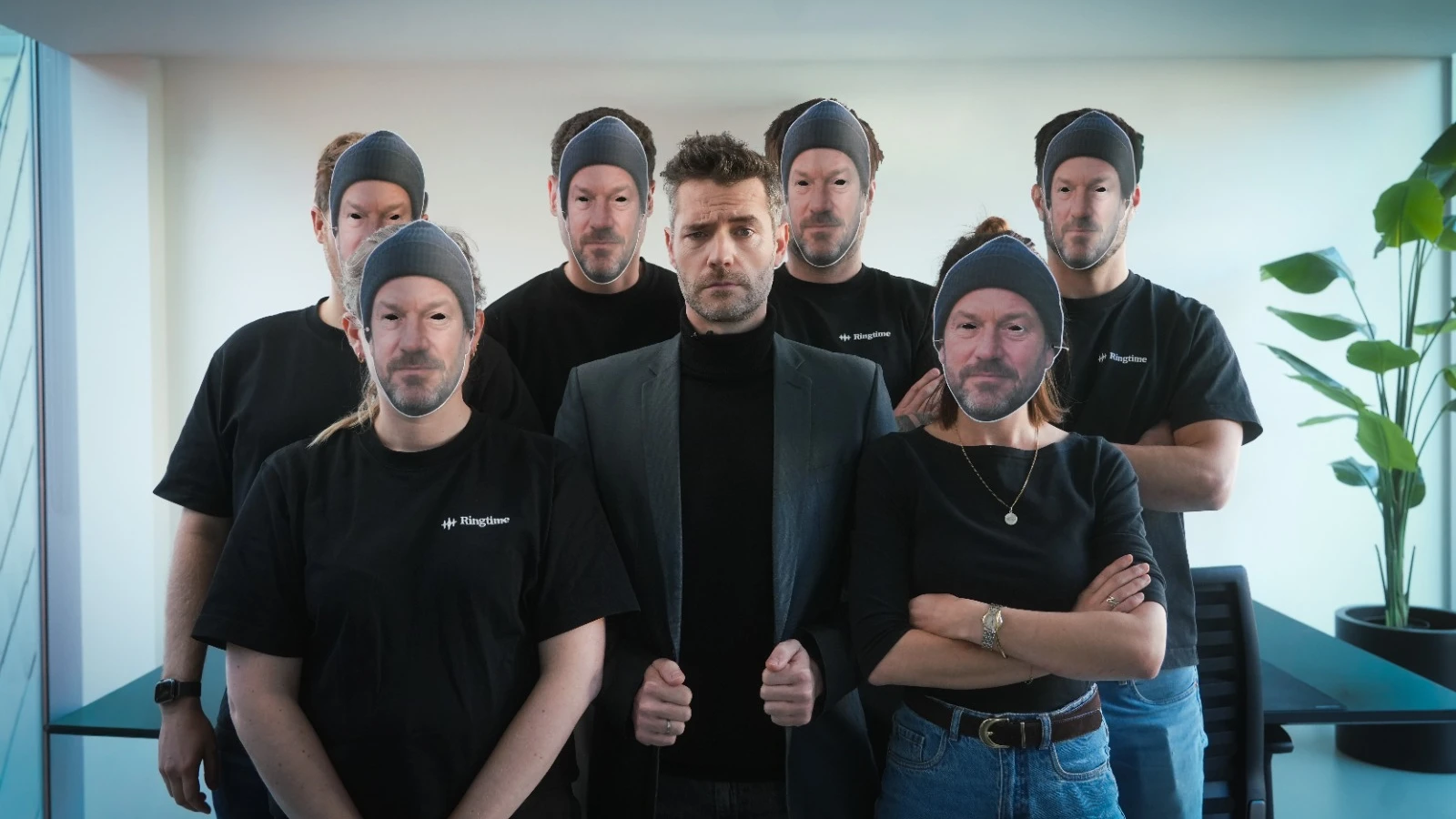
Between 21 August and 29 October 2026, a candidate called Sam applied 457 times for frontline jobs in Belgium and the Netherlands, such as warehouse work, cleaning, retail and production. Sam applied at staffing agencies and at direct employers. Each time, Sam had the experience the job asked for and a CV to match. Sam spoke Dutch.
Sam does not exist. We created Sam to see what a candidate goes through after clicking "apply".
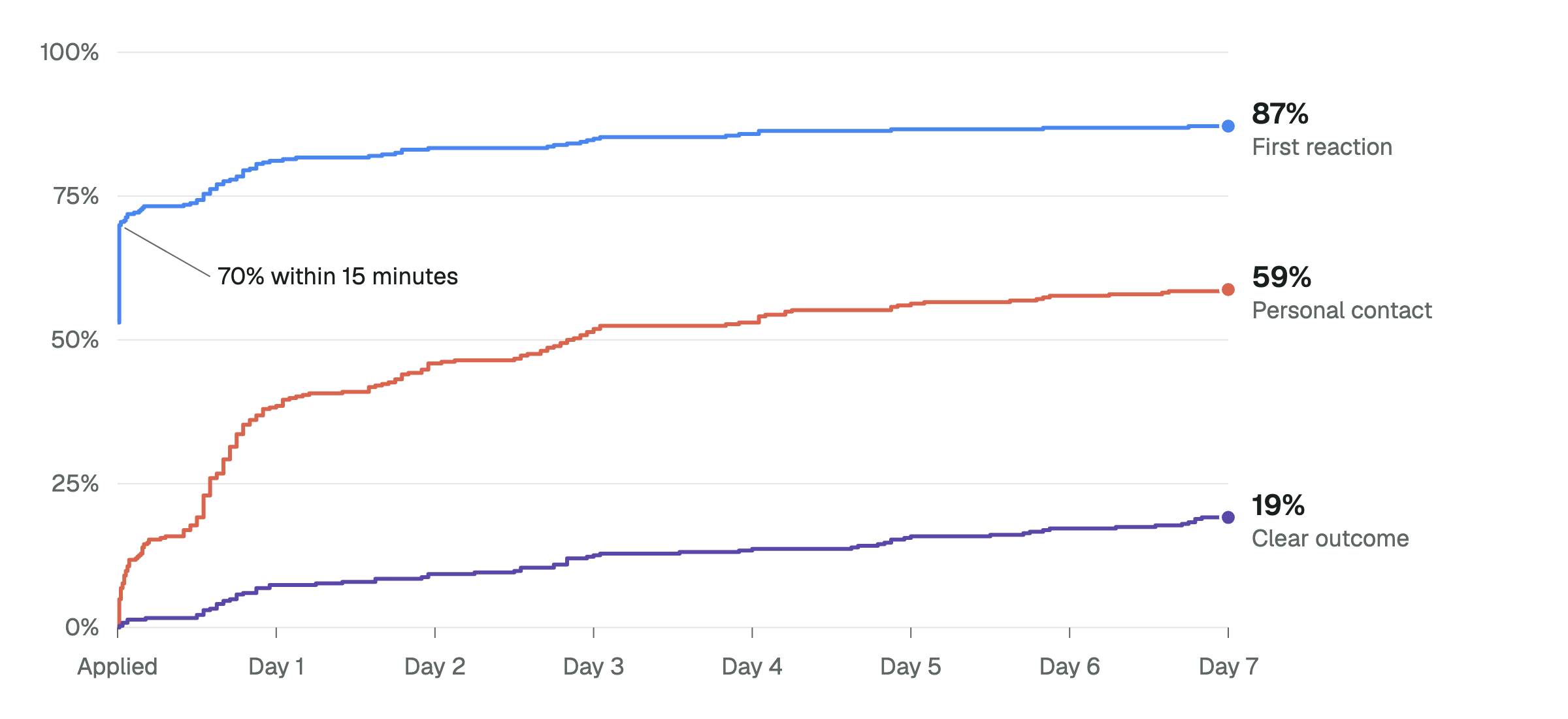
The short answer: most job applications got a fast first reply. 87% of the 366 applications we followed for a full week got a reaction and 70% got one within 15 minutes. After that, it went quiet. One week after applying, 81% of the applications had no outcome: no invitation to an interview and no rejection.
Why is one week too long for candidates?
People who look for work in a warehouse or with a cleaning company often need a job fast, so they apply at several companies at once. The company that gets back to them first with a next step has a much bigger chance to hire them. That is why we measured every application over a strict window of seven days.
In September 2026, HR services firm Acerta and job site StepStone Belgium asked more than 1,700 job seekers about their applications: 65% said their applications (almost) always go unanswered. We wanted to see what that looks like from the inside, for the jobs where speed matters most.
How fast do candidates get a first reply?
Sam got a reaction to 87% of the applications, more often than that survey suggests. For 70%, the reaction came within 15 minutes.
About 8 in 10 of those first reactions were automated: 260 of 319. A confirmation within minutes is good for candidates, because it tells them the application arrived.
We wrote before that a fast first response says little on its own. The chart above shows what follows it. The blue line jumps up in the first minutes. The other two lines climb slowly for a week.
What happens after the automatic reply?
A person called, emailed or messaged Sam for 59% of the applications. Half of those people got in touch within 16 hours. Two thirds got in touch within a day.
Staffing agencies made personal contact more often than employers. The share of applications where no person contacted Sam within a week:
- Applications sent directly to an employer: 57% (n=171).
- Applications sent to a staffing agency: 28% (n=195).
How many applications end in a clear answer?
Within a week, 7% of the applications led to an interview invitation. 12% ended in a rejection or a message that the job was filled. For the other 81%, Sam did not know where things stood.
Of the applications where a recruiter called or wrote to Sam, 79% still had no outcome after a week. The applications that did end took a median of two days and eight hours to get there.
After the first week, we kept following every Belgian application. Only 3 more of the 98 got an outcome.
The Netherlands scores a little higher than Belgium on every step, but the drop after the first reply is almost the same size in both countries.
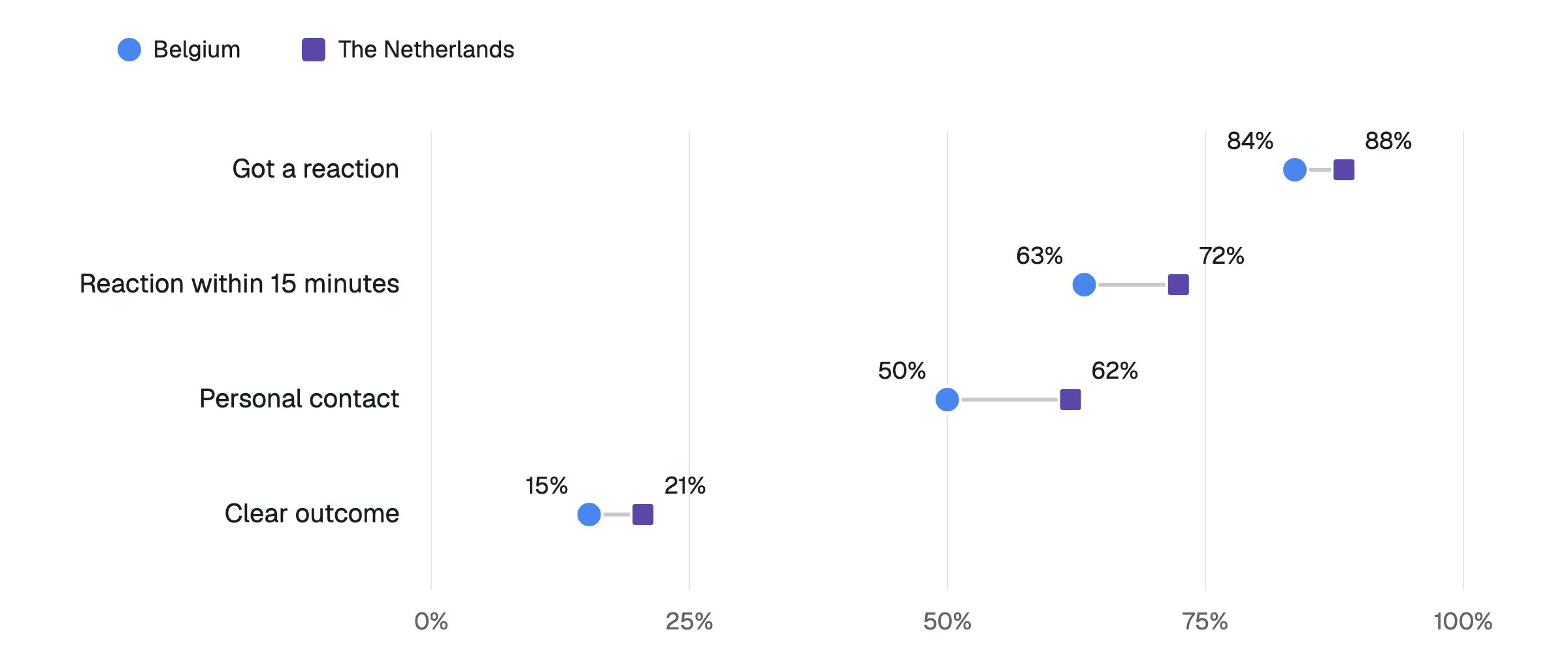
Within 7 days of applying:
- Got a reaction: 84% in Belgium, 88% in the Netherlands, 87% in both countries.
- Got a reaction within 15 minutes: 63% in Belgium, 72% in the Netherlands, 70% in both countries.
- Got personal contact: 50% in Belgium, 62% in the Netherlands, 59% in both countries.
- Invitation to an interview: 6% in Belgium, 7% in the Netherlands, 7% in both countries.
- Rejection or a message that the job was filled: 9% in Belgium, 13% in the Netherlands, 12% in both countries.
- No outcome: 85% in Belgium, 79% in the Netherlands, 81% in both countries.
Sam applied 457 times in Belgium and the Netherlands: 98 times in Belgium and 359 times in the Netherlands. The 366 applications in this list are the ones whose seven-day window had closed when we exported the data. Sam also applied 24 times in the UK. That pilot is too small to report on its own, so it is not in these figures.
What are the limits of this test?
By design, Sam never picked up the phone but answered every email and every message. A recruiter who only called reached voicemail. We counted every call as personal contact.
A real candidate picks up some of the time, so some of those calls would lead to an interview or a clear no. This is a mystery shopper test, not a representative study.
One finding holds within the test: for 43% of the applications without an outcome, no person tried to make contact in the first week. There was no call for Sam to miss.
How do you give candidates a clear answer?
Keep the fast automatic reply. What helps a candidate most is the step after it:
- Follow it with a step the candidate can take: a call, a few screening questions by message or a slot to book.
- Take that step within a day. Two thirds of the personal contact in this test came within 24 hours. A candidate who hears nothing for days often takes the first job that does call.
- Use the channels frontline candidates open. Follow a missed call with a message. Our frontline channel map shows which channels they use per country.
- Tell every candidate how it ended. A short message with a yes or a no lets the candidate move on to the next job.
The candidate is waiting for the second message
Sam could wait for weeks, because Sam is fictional. A real candidate who applies for a warehouse job on Monday needs an invitation or a no before the week is out.
At Ringtime we build AI agents that screen candidates by phone and WhatsApp and book the next step, so recruiters keep their time for the conversations that matter.
On the Sam applies results page you can filter the figures by country, firm type and sector. You can also check if Sam applied at your company.
Frequently asked questions
How many job applications get a response?
In Ringtime's mystery shopper test in Belgium and the Netherlands, 87% of 366 applications for frontline jobs got a reaction and 70% got one within 15 minutes. About 8 in 10 first reactions were automated. One week after applying, 81% of the applications still had no outcome: no interview invitation and no rejection.
How long does it take to hear back after applying for a job?
For frontline jobs in Belgium and the Netherlands, an automated reply often came within 15 minutes. A person got in touch for 59% of the applications. Half of them got that contact within 16 hours. A clear outcome was rare. After seven days, 7% had an interview invitation and 12% a rejection or a message that the job was filled.
Do staffing agencies or employers respond more often to job applications?
In Sam's test, staffing agencies made personal contact more often. No person contacted Sam for 28% of the applications sent to staffing agencies (n=195). For applications sent directly to employers, that was 57% (n=171).
Is the Sam test representative?
No. It is a mystery shopper test with 457 applications in Belgium and the Netherlands, 366 of them followed for a full week. Sam answered every email and message but never picked up the phone, so recruiters who only called reached voicemail. Within the test, 43% of the applications without an outcome had no contact attempt from any person.
Sources
- Ringtime, "Sam applies" mystery shopper test. 457 applications in Belgium and the Netherlands, 21 August to 29 October 2026. 366 applications measured over seven days. Status on 9 November 2026 for Belgium and 29 October 2026 for the Netherlands. Full results: https://www.ringtime.ai/resources/sam-applies
- Acerta and StepStone Belgium, Talent Pulse 2026, survey of more than 1,700 job seekers, published September 2026: https://blog.forumforthefuture.be/nl/article/twee-op-de-drie-werkzoekenden-krijgen-weinig-tot-geen-feedback-na-sollicitatie/32432
BLOG